Did you know that you can grow crystals at home? In fact, you might even have all the ingredients that you need in your kitchen right now. Seriously.
 I’ve always been a big mineral nerd. When I was a kid, I used to beg my parents to buy me quartz and amethyst crystals at the local bookstore. Mom and Dad weren’t exactly thrilled, as those rocks weren’t cheap.
8 years ago, I discovered that it was possible for me to grow my own crystals. I immediately fell in love with the hobby. Since then, I’ve grown hundreds of crystals in the storeroom, made interesting discoveries, and created this website to teach others how to do the same.
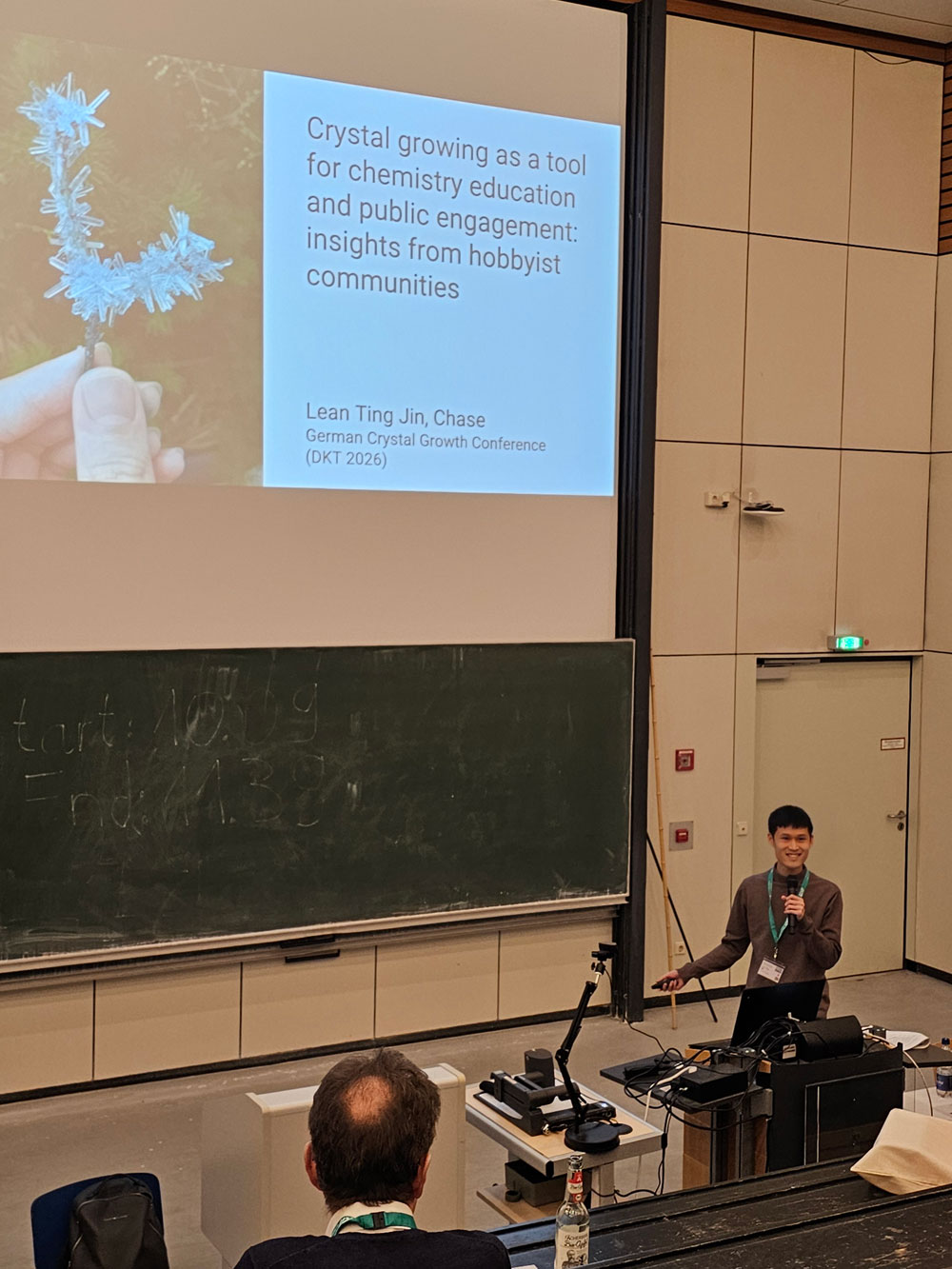
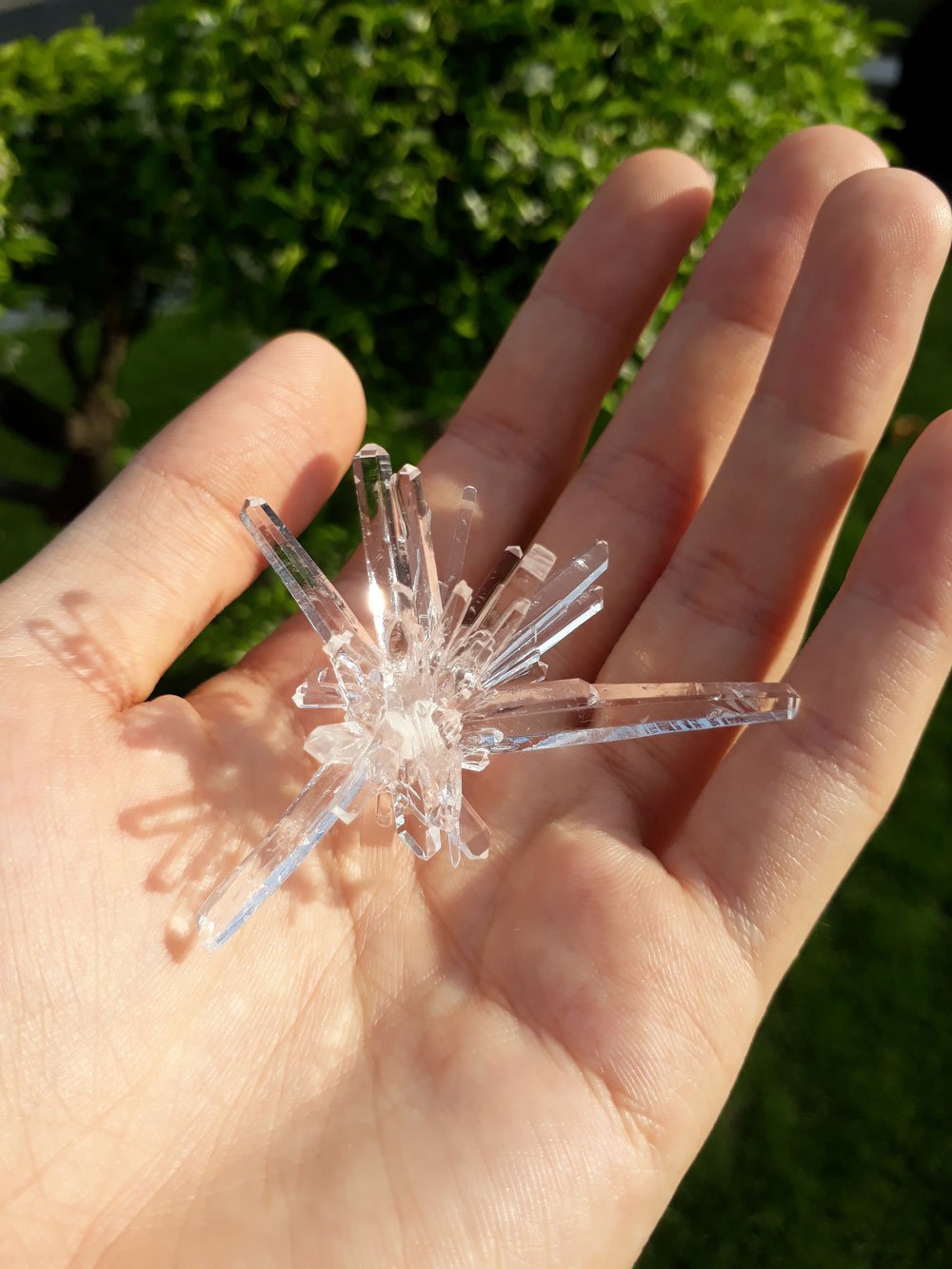 In 2026, I was invited for a talk at the German Crystal Growth Conference. There, I shared my experiences with growing crystals at home, and what I’ve observed from interacting with thousands of hobbyists around the world. It was the inspiration behind this article.
 Crystal growing has something for everyone. It’s fun for both children and adults. It’s a great family activity. It’s a interesting experiment to get students engaged in the classroom. But beyond that, crystal growth isn’t just a cool hobby – it’s also fundamental to the technology that we use every day.
Growing crystals has been one of the highlights of my life, and today, I’d like to share this hobby with you.
***
I grew my first crystal in high school chemistry class. We were learning about how chemical reactions worked. During the lab practical session, our teacher asked us to react a black powder called copper oxide with some dilute sulfuric acid inside a beaker. After we stirred the mixture around for a few minutes, the powder dissolved and the solution turned blue. This meant that we had successfully made copper sulfate.
Next, she made us filter the solution into small dishes. Then, we left the dishes in the classroom over the weekend to let the water evaporate. According to her, once the water had evaporated, blue crystals of copper sulfate would form.
I didn’t believe her. Crystals were supposed to be precious minerals mined from caves. How can you make them? I thought these “crystals” that she referred to would look like fine blue sand. A bit like the table salt you buy at the grocery store, only blue in color.
I was wrong.
The next Monday, I walked into the classroom and peered inside the dish – and I was so surprised to find big, blue, beautiful crystals sitting inside!
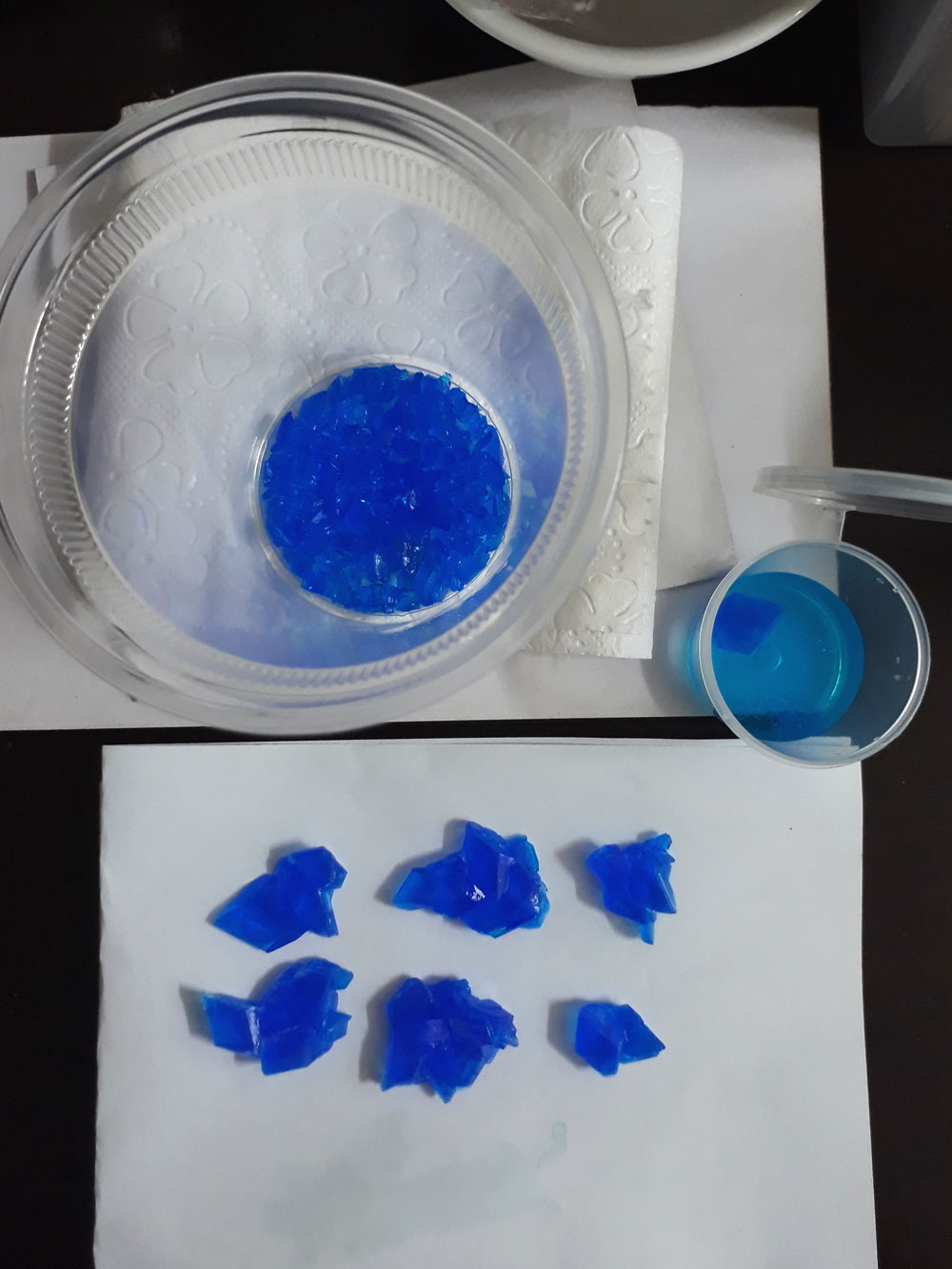
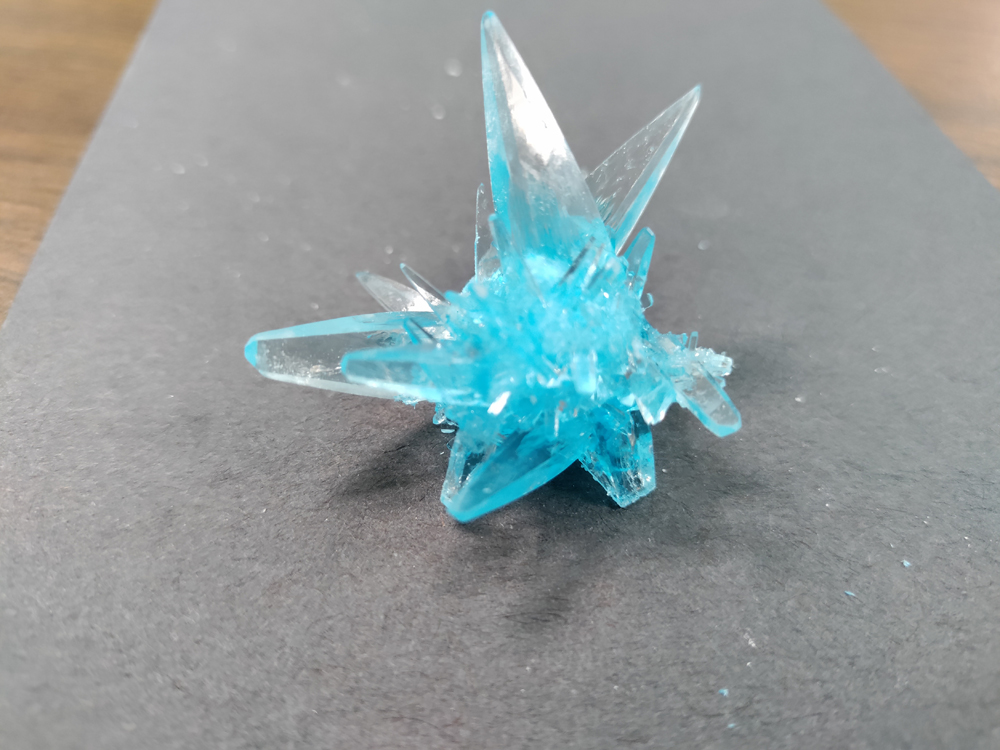
Here’s a picture of the very crystals I grew that day:
 When I came home, I immediately looked it up online. This was a real thing.
I proceeded to order 1kg of copper sulfate.
Over the next few weeks, I experimented with different techniques to grow better crystals. I changed the amount of copper sulfate I used, the size of the container and the speed of evaporation, all in an attempt to grow the biggest, nicest crystal possible. And it worked. After a few months, I was able to get very good results.
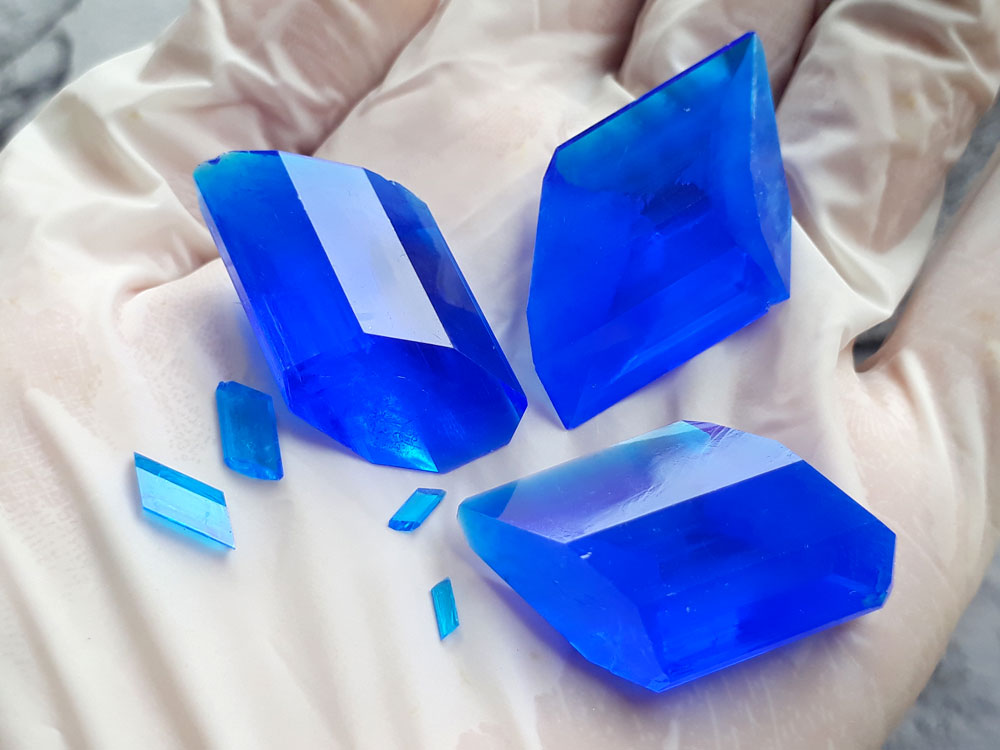 I was so inspired by the fact that you could just grow crystals yourself that I couldn’t stop growing them!
I was even happier when I discovered that you could also make crystals from other substances. I started growing crystals from sugar, table salt, Epsom salt, borax, MSG, and just about any household compound that I could get my hands on.
I would find that crystals of different compounds had different shapes and characteristics. For example, table salt crystals look like cubes, while Epsom salt crystals are long and needle-like.
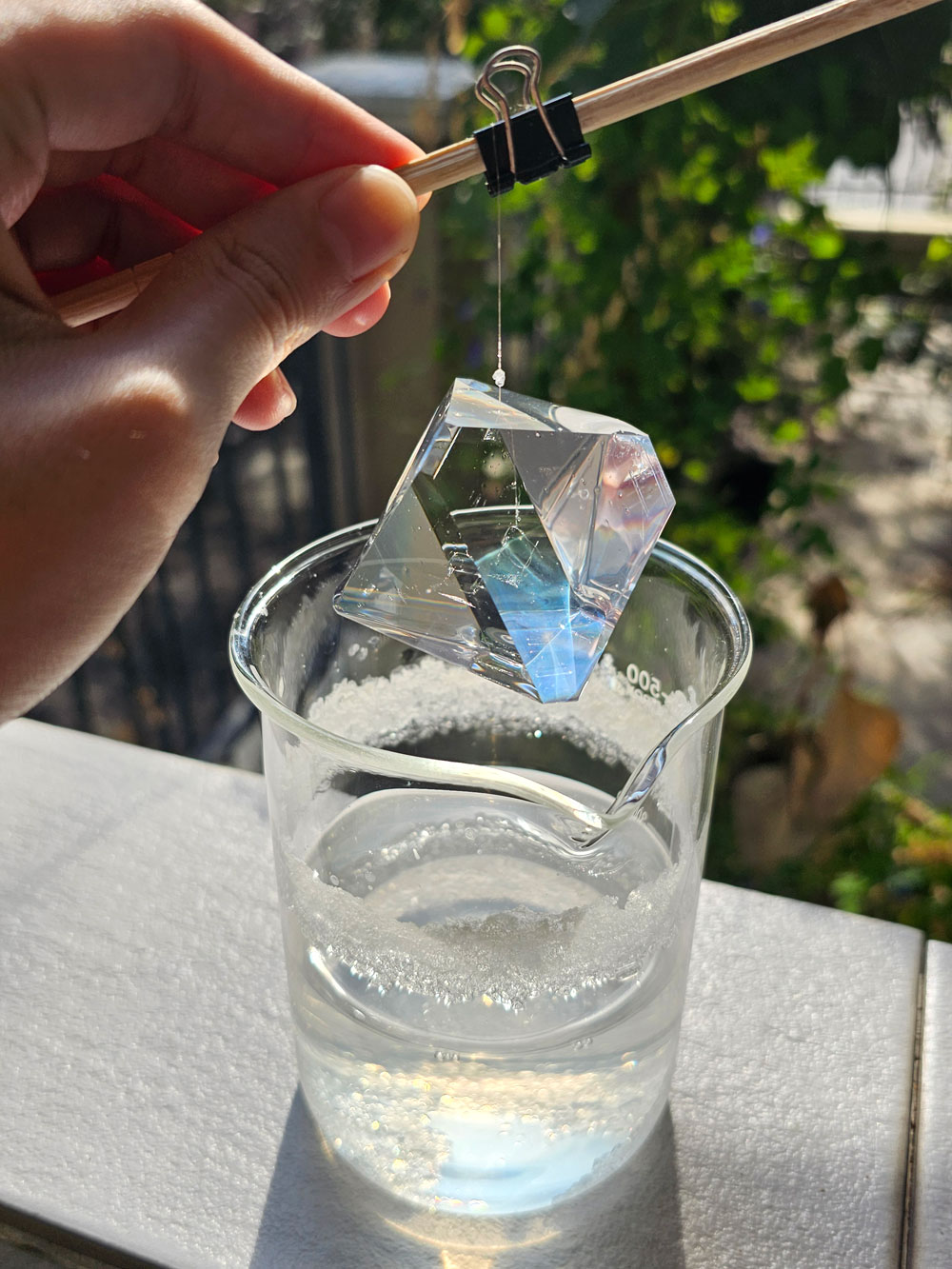
Also, some substances form large, beautiful crystals more easily than others. I was particularly successful in growing octahedral crystals from alum. Alum is an ingredient used for water purification, deodorant and aftershave.
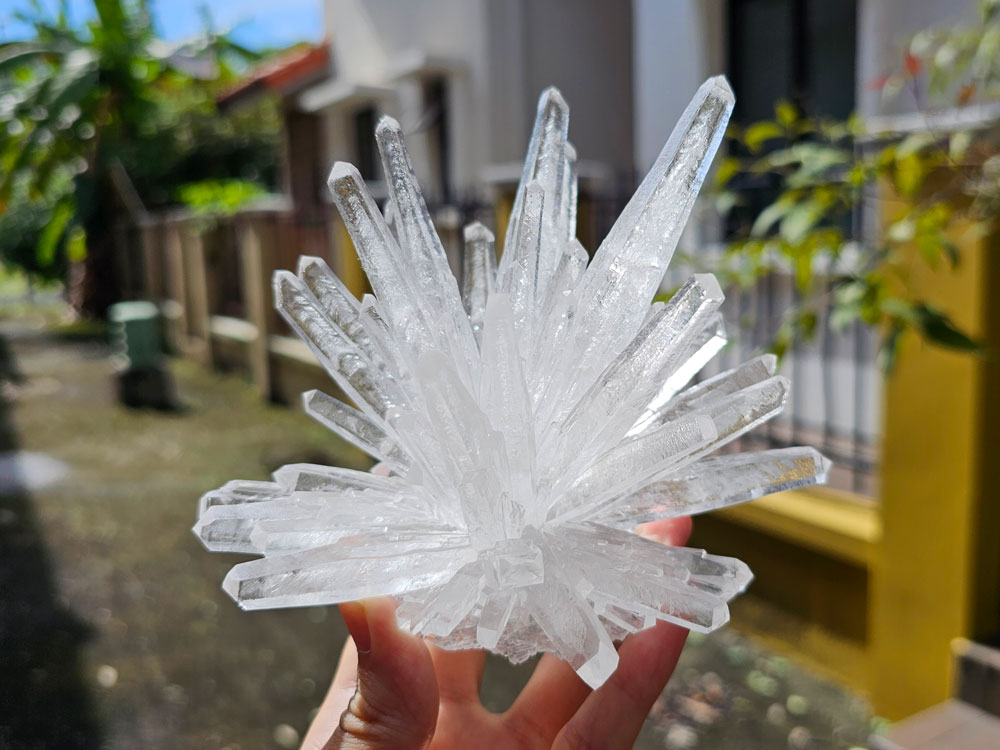
 A common nitrogen fertilizer called MAP also gave me impressive, spiky crystals:
 Over the years, I would make many interesting discoveries. For example, I found a way to grow large, transparent crystals from table salt, which is usually notoriously difficult to crystallize. I also came up with a technique to grow huge single crystals from Epsom salt.
 A study I made on effect of growth rate on the clarity of salt crystals. Faster growth rate = cloudier.
I decided to document and share what I’ve learnt with others. At this time, there was not much detailed information online on how to grow crystals at home. Therefore, I created this website, crystalverse.com and wrote several crystal growing tutorials. Among them are how to grow crystals of sugar, salt, alum and fertilizer.
In the meantime, I also started posting pictures of my crystals on Reddit. This is a screenshot of the first ever post I made on r/crystalgrowing, featuring a few table salt cubes that I was particularly proud of. As the response was quite positive, I got the idea to share my crystals to other Reddit communities too.
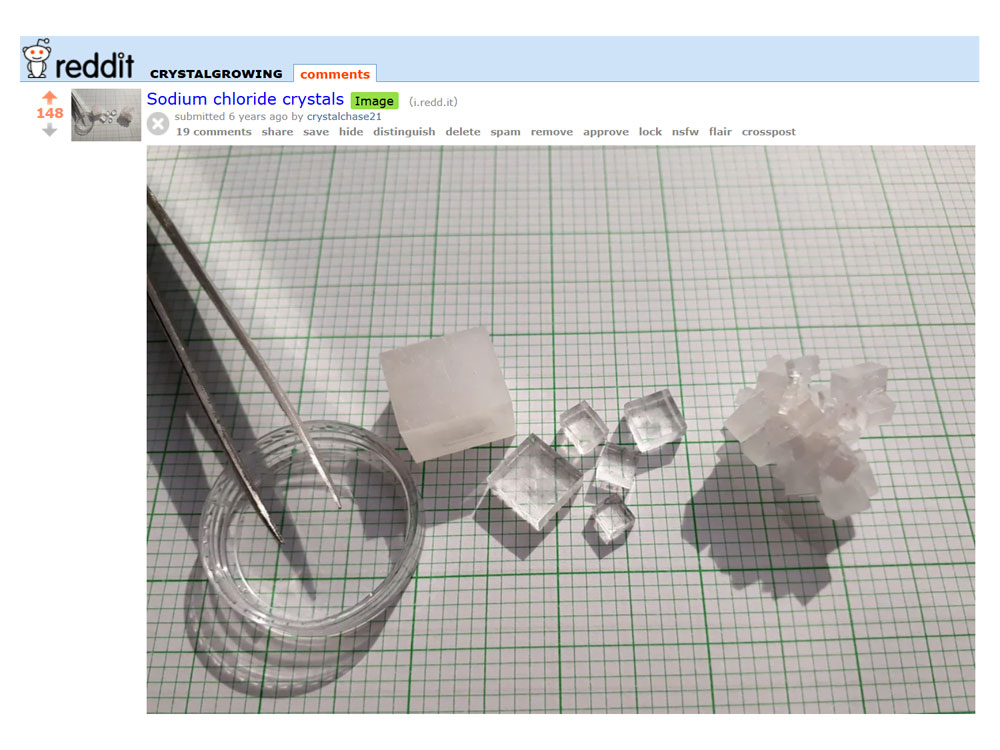 I posted a picture of the salt crystal to r/mildlyinteresting. Apparently the folks there thought that it was more than mildly interesting, as it reached the front page of Reddit that day.
Over the years, I’ve shared my crystal growing adventures across the Internet – on Reddit, YouTube, Imgur, Hacker News, Twitter and more. Many of my posts have received considerable attention, and they’ve gotten more than 100 million views in total.
When people see my crystals, their first reaction is almost always, “this looks beautiful”, followed by “wait, you can actually grow them at home?!”
Since I regularly include tutorials on my growth process, lots of people decide that they want to do it themselves – including those with no chemistry experience.
Here’s a comment on one of my posts:
[…] I’m in my 30s and […] I never took chemistry when I was in school, and always had a hard time with math, so I guess I always figured I wasn’t cut out for it. You might have inspired me to dip my toes in the water!
And indeed, many of them are successful.
Here’s a funny story:
Readers of my articles usually ask where to get the ingredients they need online. In an article, I included a link to an Amazon fertilizer listing. I came back to it a few days ago, and was surprised to find that the product has more reviews about using the fertilizer to grow crystals than to grow plants.
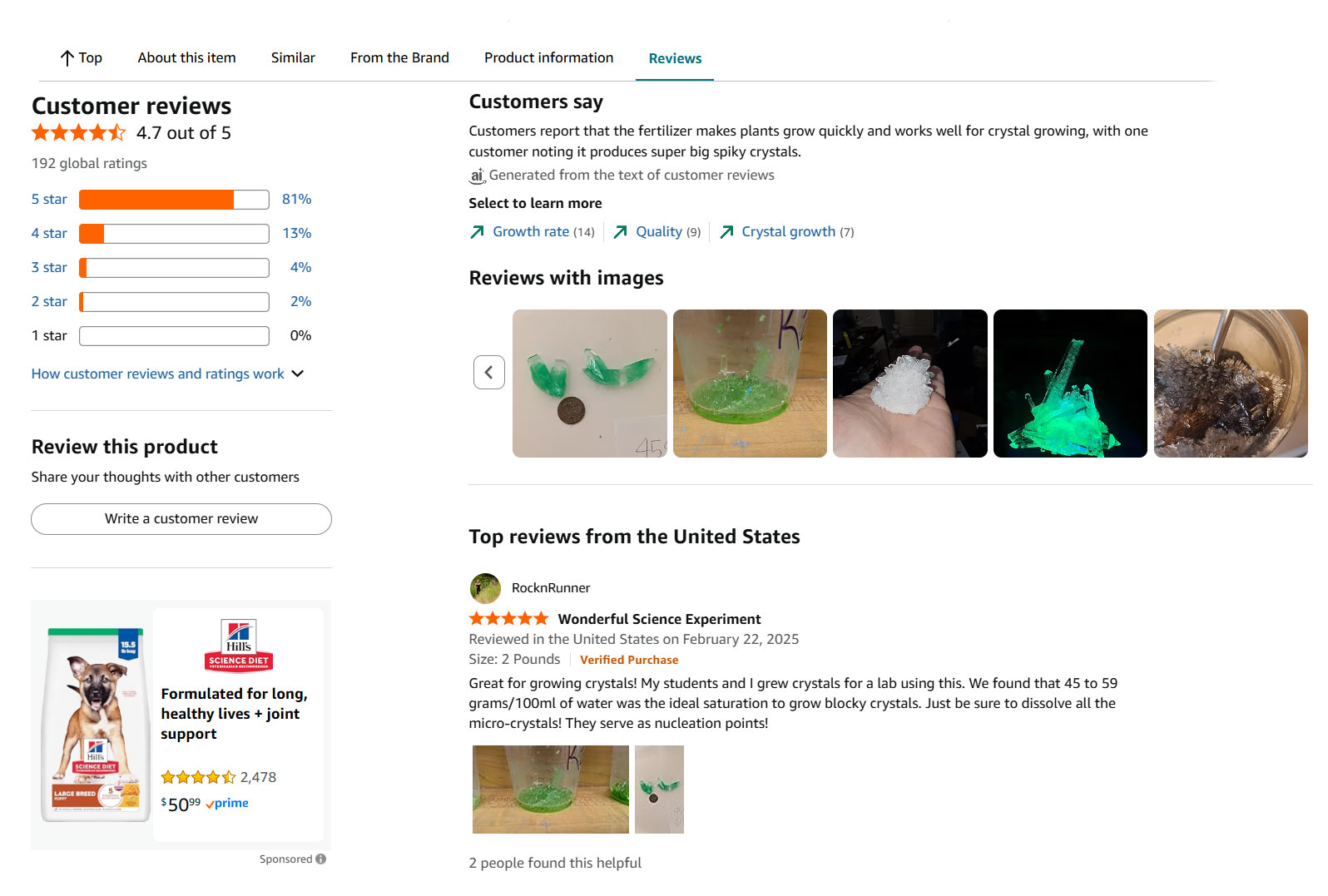 Even children can grow beautiful crystals, with adult supervision.
These crystals were grown by kindergarteners/1st graders in the US. Mr. Blanchard, who taught the class, shared it with me:
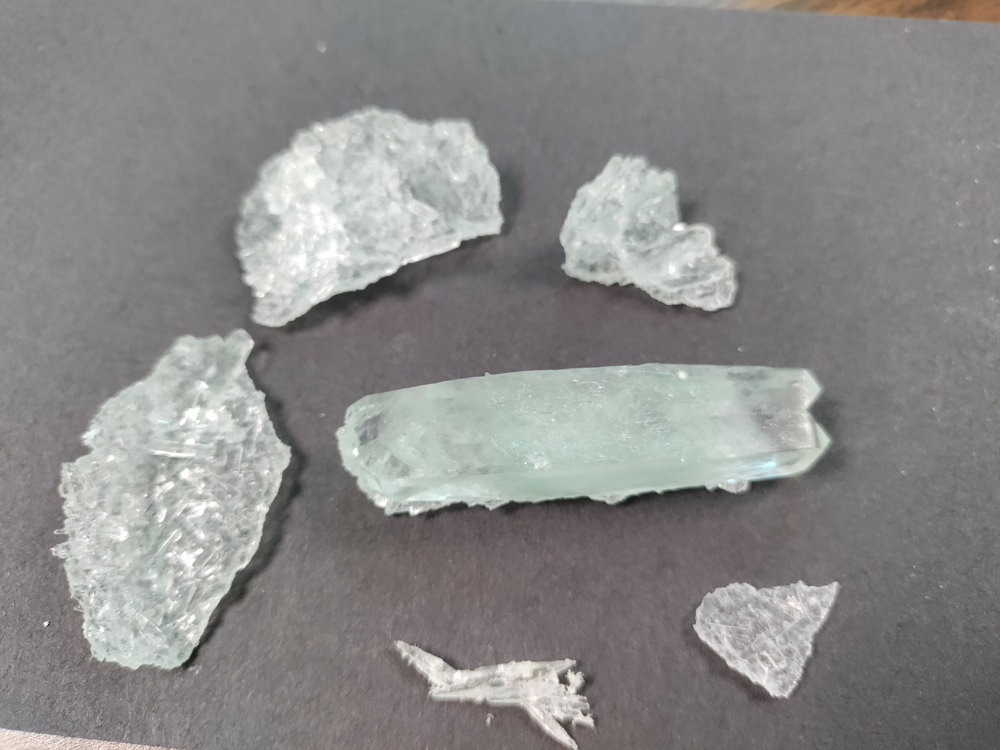 On the other hand, teachers who introduce crystal growing as a classroom activity say that their students enjoy it very much.
Here’s a nice anecdote by u/Appropriate-Waltz630, who wished to remain anonymous. It’s a bit long, but I promise it’s worth it.
I’m a first year fifth grade teacher (10-11 year olds). I’ve been a follower of this sub [r/crystalgrowing] and a (bad) crystal grower for a few years now. So, when I started teaching this year I brought crystal growing in at the first reasonable opportunity. It has been, by far, the most popular part of our year. The in-class growing was so popular that the class parents pitched in and got the materials so I could make a jar of solution to send home with each of my students so they can grow at home. They are currently growing crystals at home and journaling their progress. It has been awesome and they are SUPER engaged and curious.
Sadly, we had someone break into my classroom in the middle of the night this year. They stole most of the students’ laptops. When the kids came in the next morning and heard the news, the first thing they all asked was “Did anything happen to the crystals we’re growing?!?” It was the only thing they considered actually important / irreplaceable 🙂
Hopefully I’ve convinced you that it’s a cool activity to try.
If you’re wondering where to start, sugar, alum and MAP fertilizer are good choices. These substances are cheap, safe, and easily form impressive crystals without prior chemistry knowledge. Therefore, they are perfect for family activities and science fairs.
 Alum is always a good option for beginners.
With that said, crystal growing has something for everyone. There are substances and techniques suitable for all age and experience levels.
For high school students, copper sulfate is a staple in chemistry labs. The crystals are bright blue and very attractive. One caveat is that copper sulfate is mildly toxic. Therefore, teachers should remind their students to handle it properly.
Crystallization competitions are also occasionally held in schools. Sometimes it’s just about growing the best crystal possible. Other times, it’s about investigating the factors that affect crystal growth. Here’s a video made by some Spanish students on finding the best doping agent to crystallize MAP for one such competition, and some crystals they grew:
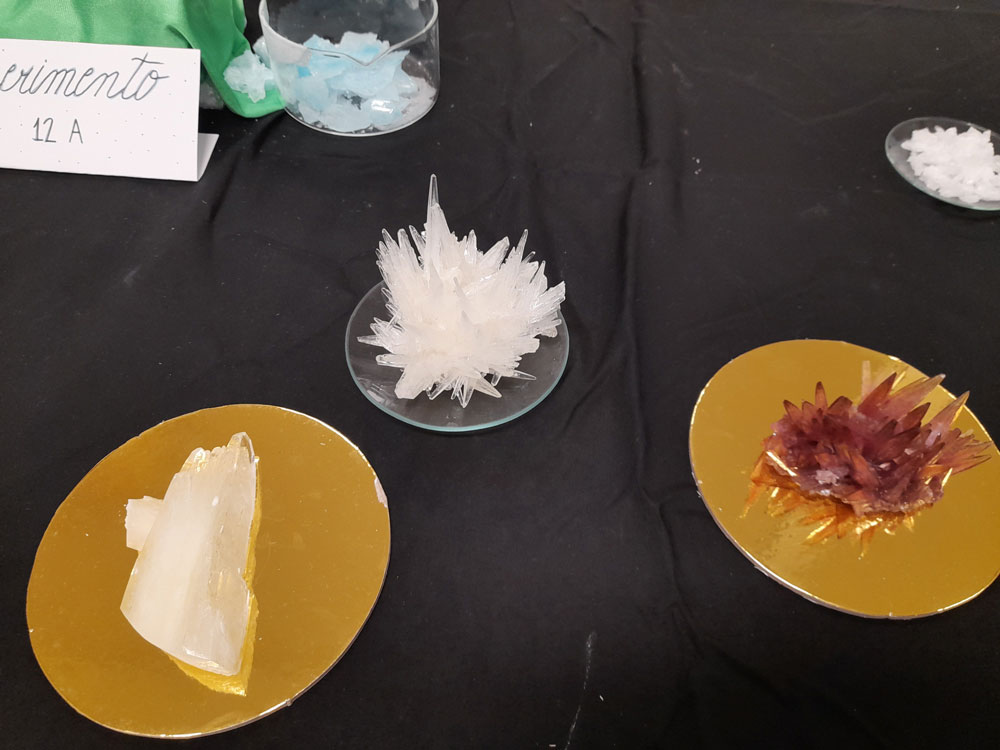
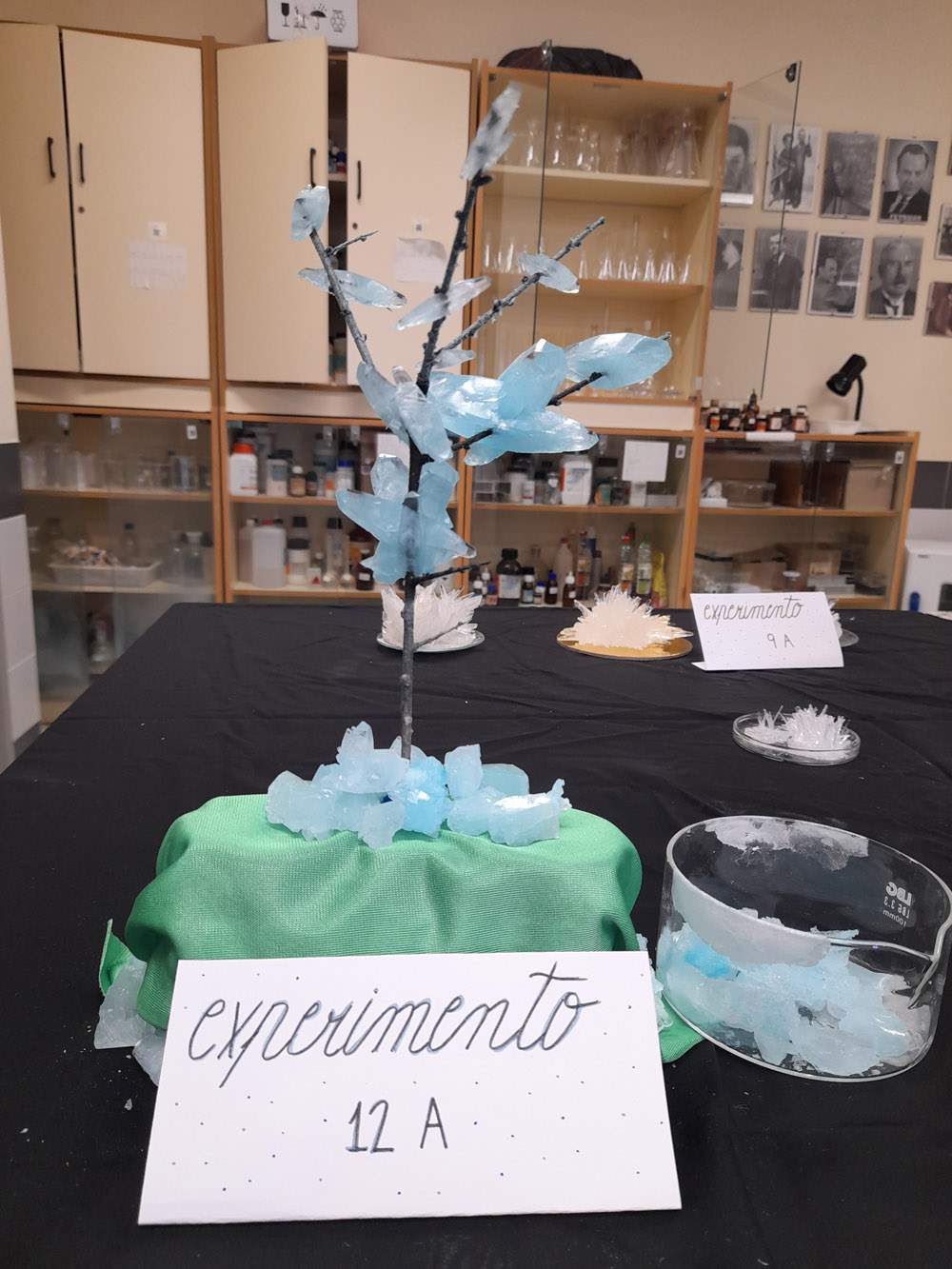 Big thanks to Chaima and her team members, Lamiae & Cintia for sharing. I later found out that they even won the Audience Choice Award.
Outside the classroom, more experienced hobbyists can synthesize their own compounds. For example, I reacted scrap copper with vinegar to make a compound called copper acetate. After 7 months, I managed to grow this black copper crystal that looks almost like obsidian.
 Professionals can also leverage their expertise to grow crystals. Mr. Voelho, who studied material science for his engineering degree, designed an elaborate chamber to monitor and control the temperature and humidity of his growing setup.
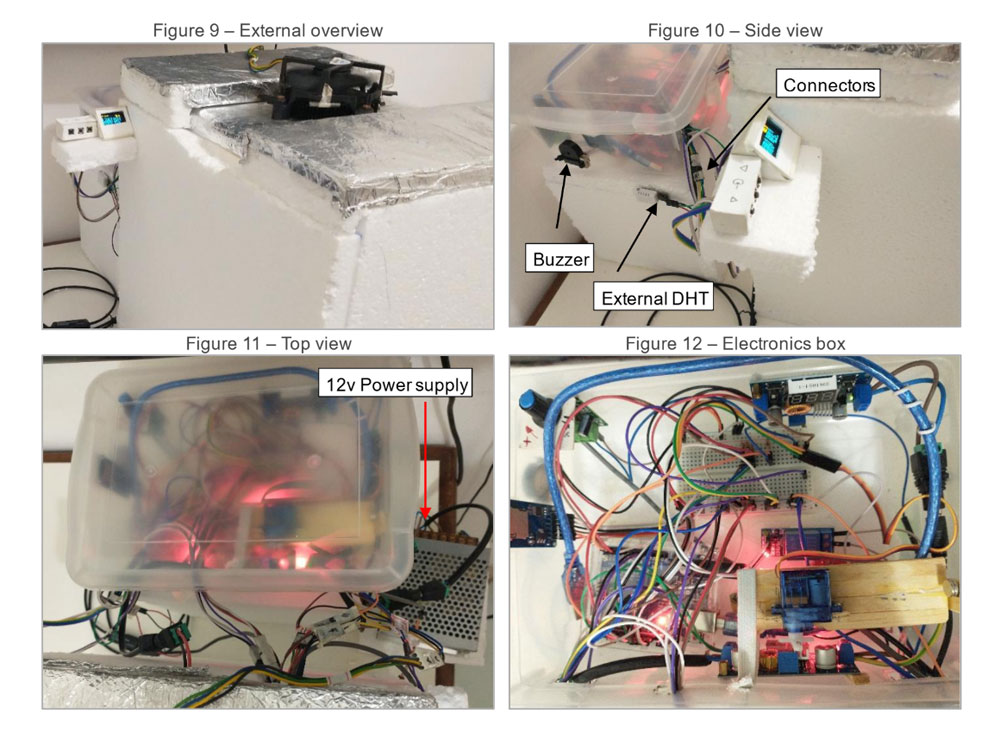 Details can be found on his GitHub page.
Artists too can incorporate crystals into their work. For example, Elliot Bastianon makes beautiful sculptures from copper sulfate. His work has been exhibited in multiple galleries across Australia.
 Check out Elliot’s Instagram here.
But this hobby isn’t just fun.
You can also learn a lot when growing crystals.
When people start growing crystals, they also start asking questions like:
Why did some of my crystals grow faster than others?
Why do the crystals grow into this particular shape?
Why did these crystals dissolve?
And it is this curiosity that drives them to learn more about science, and discover that the world is richer than it seems.
I find this comment on my guide on growing sugar crystals quite heartening:
Wow I never knew we could make rock candy at home I thought it was just made in factories.
Thanks chase for inspiring me to learn science and I’m a sixth grader well I hope you have a good day hope you gat the reply. Please send more totorials bye😁
— Munchy
All of a sudden, rock candy isn’t just a black box to her – it’s something tangible that she understands, and can possibly make herself.
Which begs the question, what other everyday objects can be made not just in factories, but also at home?
In fact, you could argue that almost everything around us was first made at home, or at least assembled by hand by someone who deeply understood how they worked. That is, after all, the definition of the word invention.
I feel like many people are intimidated by science, not because it’s not interesting, but because it feels difficult, distant, disconnected from their everyday lives. They think that science is something that happens far away in a lab, and it has nothing to do with them.
But these same people are interested in growing crystals, and in many cases, are willing to learn more to grow better crystals. All of a sudden, science doesn’t seem so distant anymore.
A guy called Marky told me that when he was in middle school, he thought chemistry was boring. Then, one day, he stumbled upon a video showing the growth of alum crystals. At that time, he didn’t even know what alum was, but his curiosity got the better of him. Eventually, he not only managed to grow some amazing crystals, he also improved his chemistry grades.
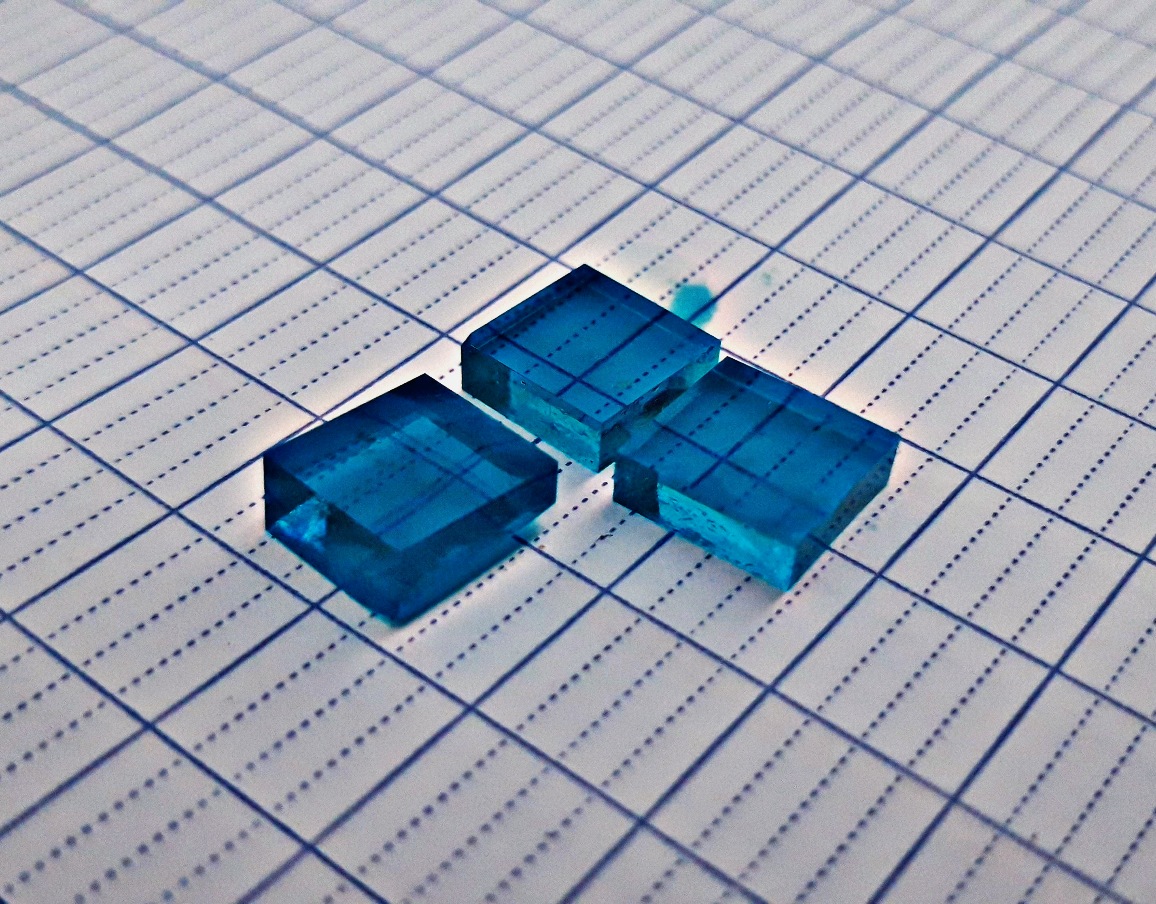 Some very beautiful copper formate crystals grown by Marky. They have even been featured in a presentation at the American Conference on Crystal Growth and Epitaxy in 2023.
According to Marky:
Crystal growing played a major role in my life, a burning flame that pushed me out of my shell and [to go] beyond in life.
The parent of a middle schooler shared that their child was struggling to choose a science fair topic. He ended up growing crystals of alum, borax & fertilizer, and studied the effect of impurities on crystal growth.
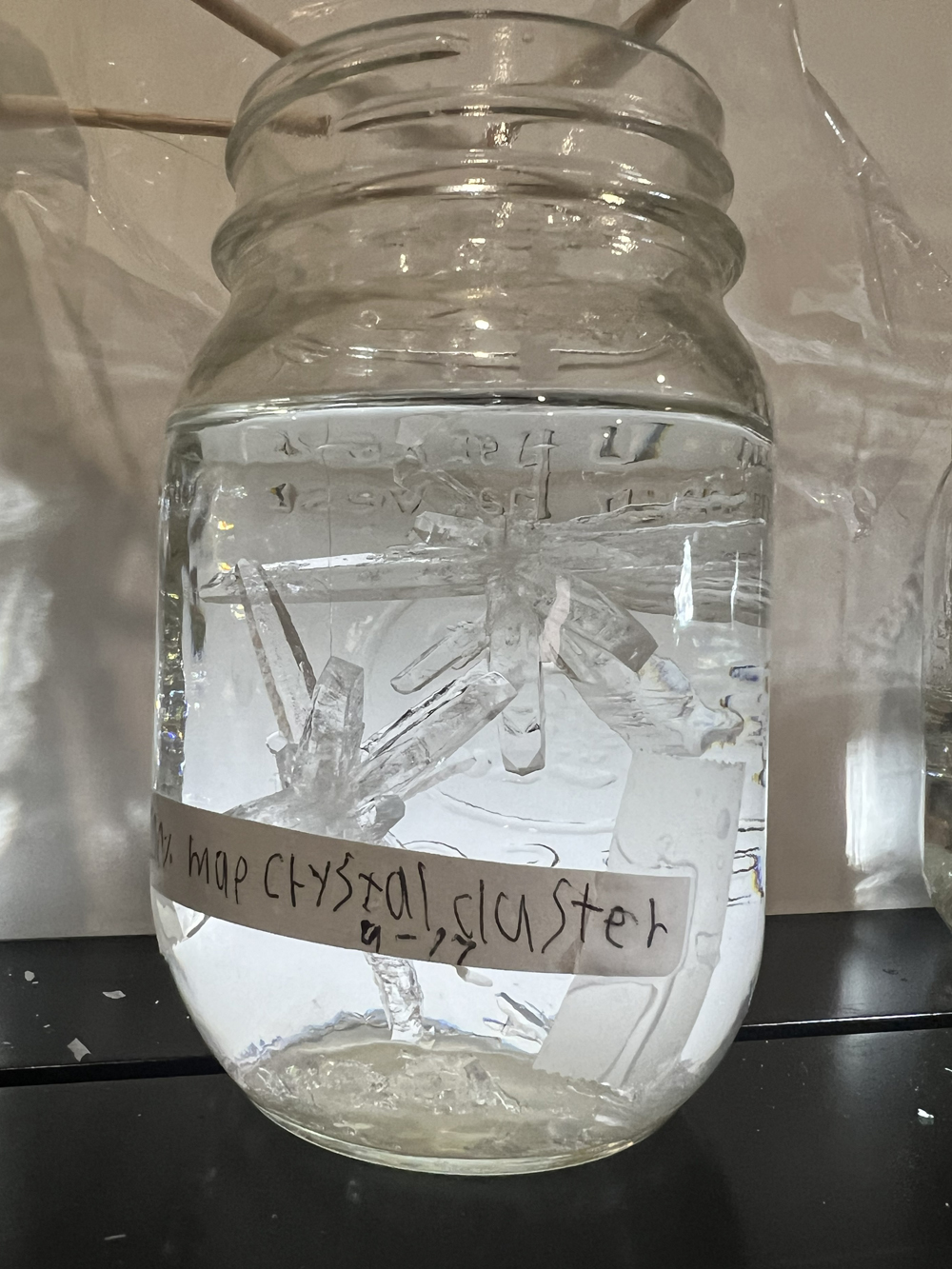 Some crystals that he grew.
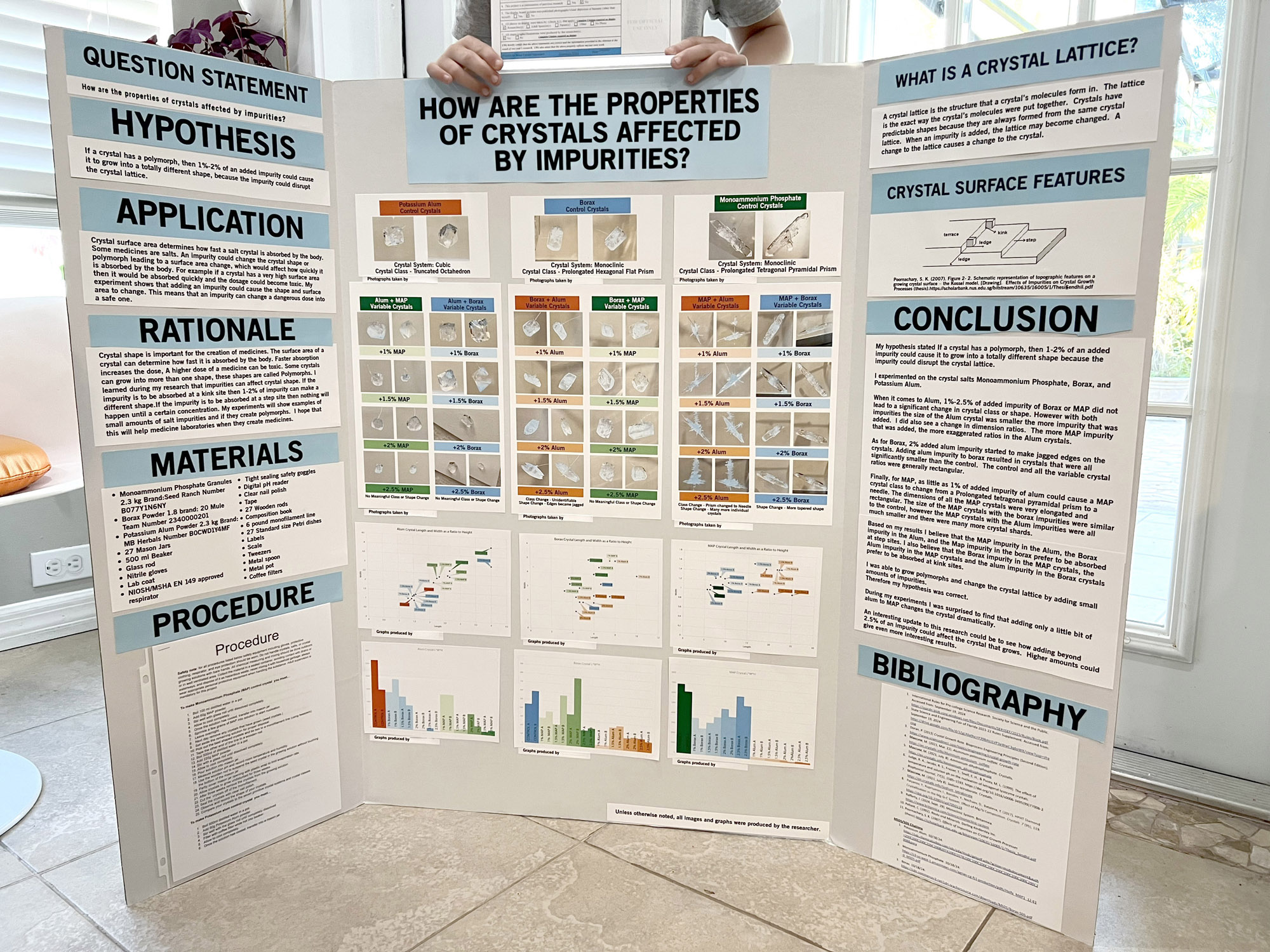 The (very impressive imo) poster he made for the science fair.
It was a success, because he not only learnt a lot during the process – he is now using that knowledge elsewhere, as he’s part of the rocks and minerals team in the Science Olympiad.
He’s not alone in that regard.
When you start growing crystals, you’ll discover that the concepts used in this hobby frequently pop up in other areas of life.
For example, when you grow crystals, you will observe that impurities can significantly affect the appearance of the final crystal. Usually, if you try to grow crystals from impure alum, or MAP fertilizer, the results will tend to crack or have jagged edges. One time, the fertilizer I bought was so impure that the crystals I grew were not white in color, as they usually were, but slightly green!
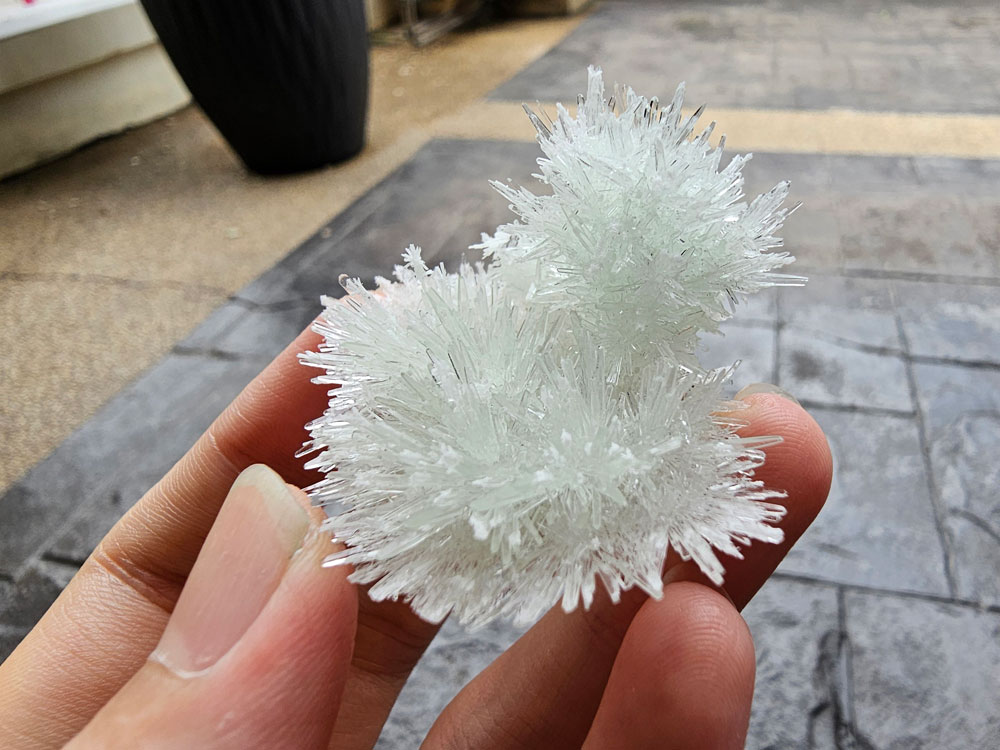 Look at the slight green tint in these MAP crystals. They are likely due to iron impurities.
Knowing this, it might not come as a surprise that impurities frequently cause natural gemstones to have different colors too. For instance, rubies and sapphires are made of the exact same material: aluminum oxide. But they are red and blue respectively because they contain different impurities.
The connection runs even deeper.
Many common, everyday objects only work because they contain crystals!
Most clocks have a quartz crystal inside them. When you put the battery in, electricity causes the quartz crystal to vibrate in an extremely consistent manner. This constant vibration is what helps us tell the time accurately.
Many lasers also use crystals to generate and amplify light. The type of crystal inside determines the color of the light produced.
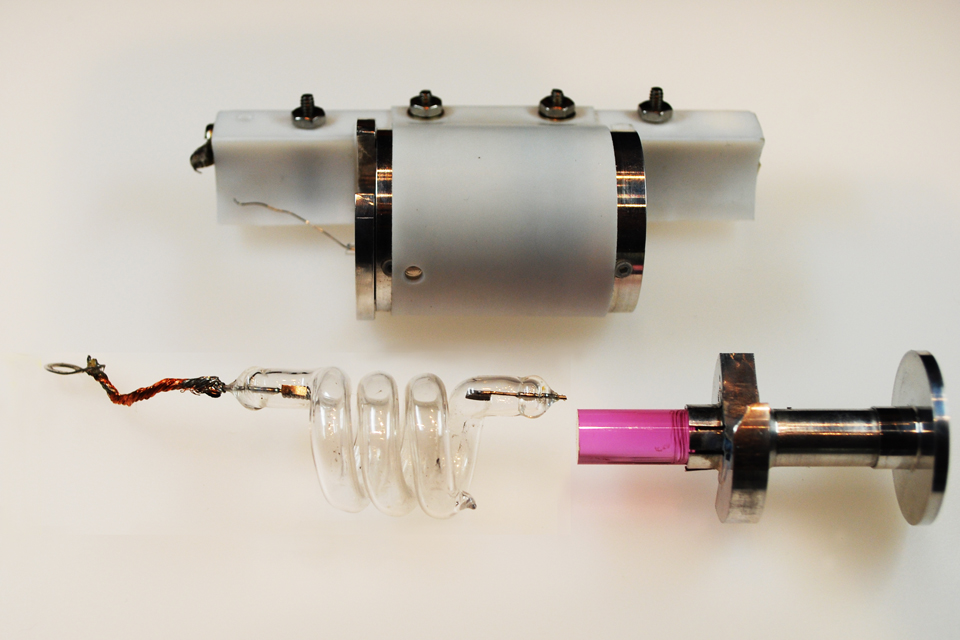 A photo of the components of the world’s first working laser, invented by Theodore Maiman in 1960. You can also see the ruby crystal used in the laser. Source: Guy Immega on Wikimedia
Solar panels, LEDs, drilling tools – all of them contain crystals in some shape or form.
But arguably the most important application of crystals lie in silicon semiconductor chips. These chips, used to power the electronics in everything from phones to laptops to AI datacenters, are made of pure silicon crystals.
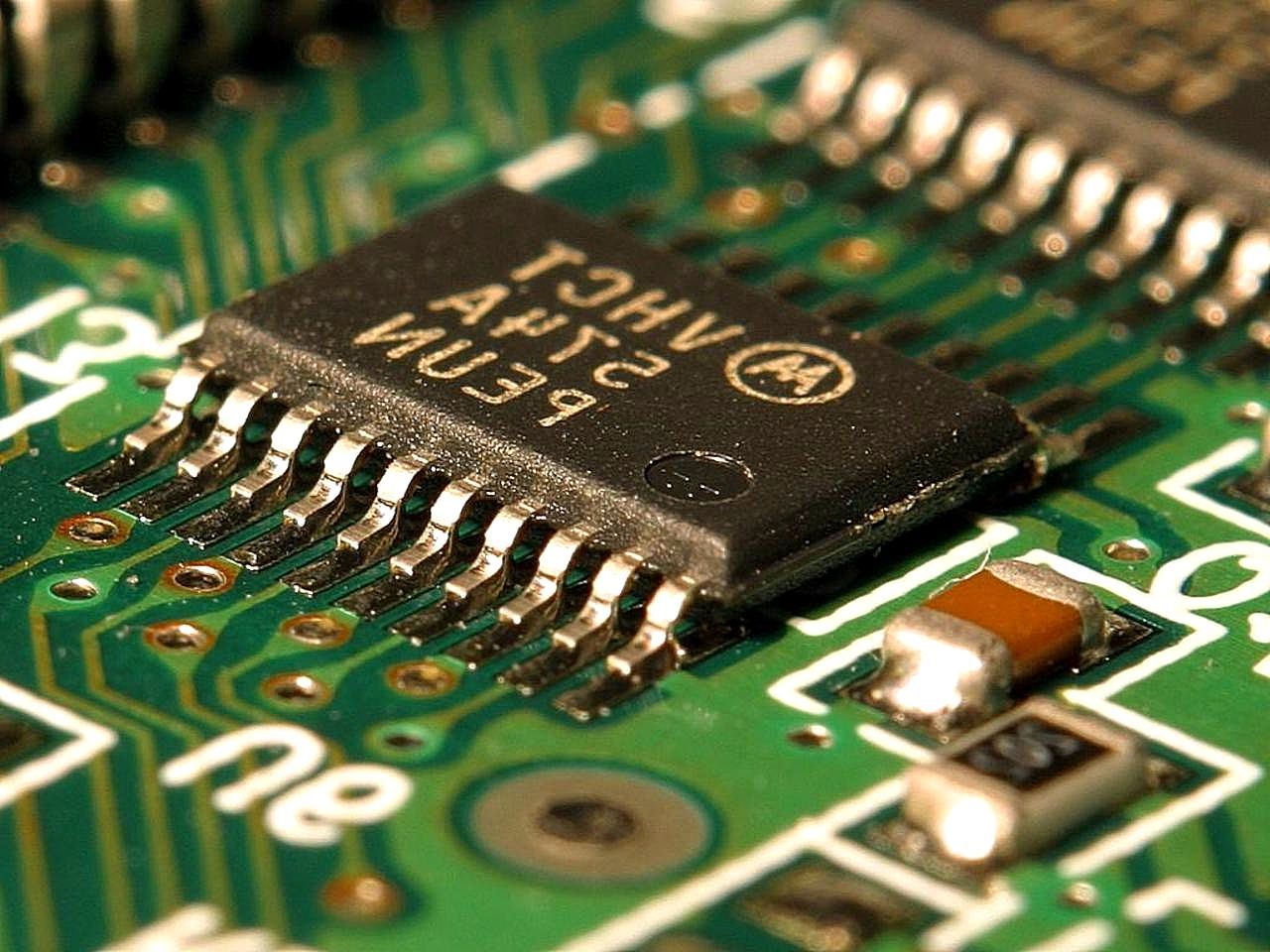 A closeup of a computer chip on a printed circuit board. Source: John Sullivan on Wikimedia.
Here’s a very brief overview of how they are made.
To make silicon chips, silicon must first be extracted from the ground. And the best source of silicon is sand. Yes, good old sand. If you look closely, each grain of sand (from certain locations) is itself a microscopic crystal made out of quartz, i.e. a compound called silicon dioxide.
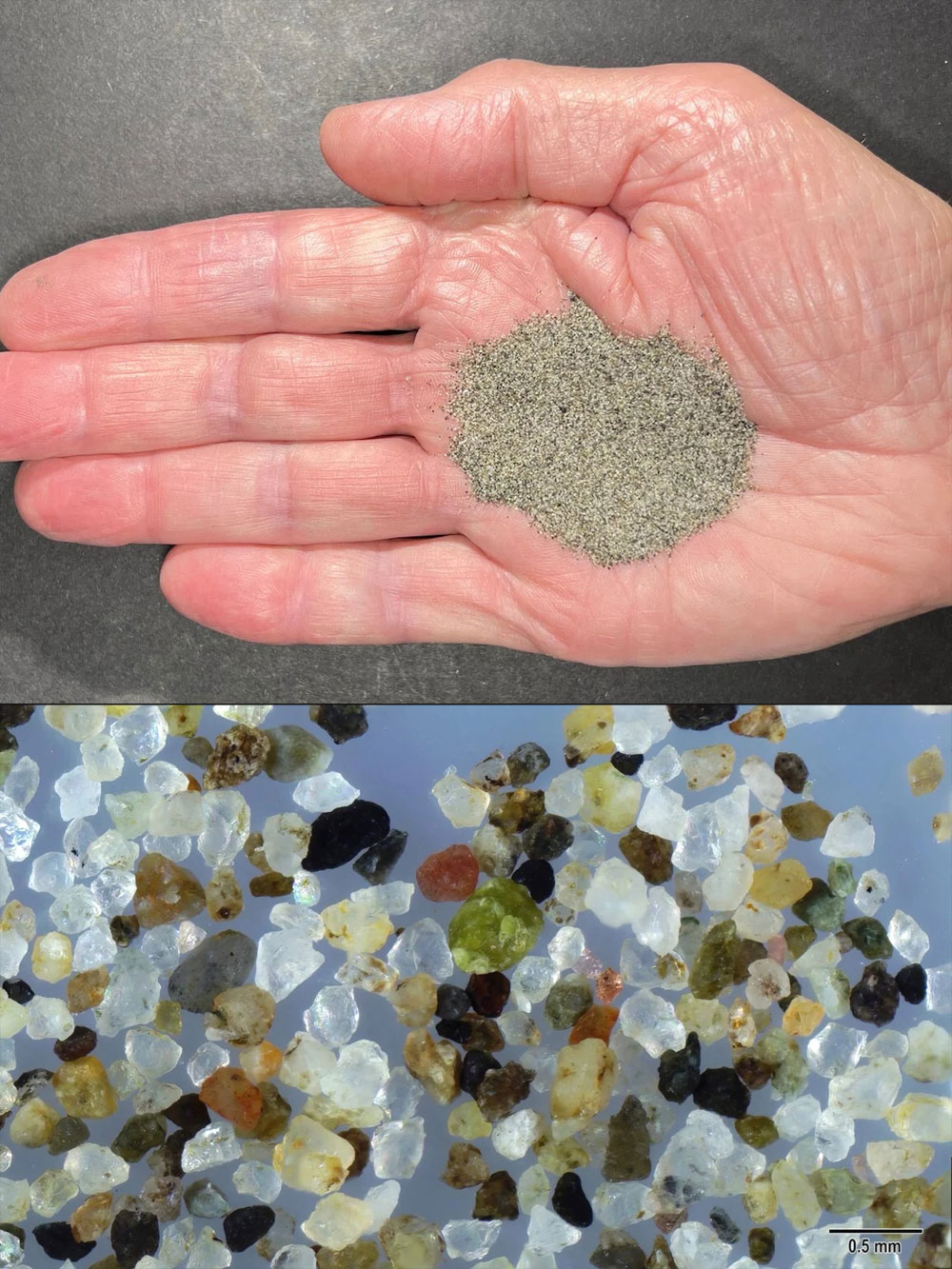 A sample of sand featuring some clear quartz and black basaltic grains under the microscope. Photo from magnifiedsand.com, a cool website showcasing sand from all over the world. This one was taken from LaPush beach, Washington.
Large amounts of sand are collected, and heated strongly to remove the oxygen, forming silicon metal. After that, the silicon is purified. Next, it is further heated until it melts into a pool of liquid metal.
A very pure, single crystal of silicon is grown from this pool using a technique called the Czochralski process.
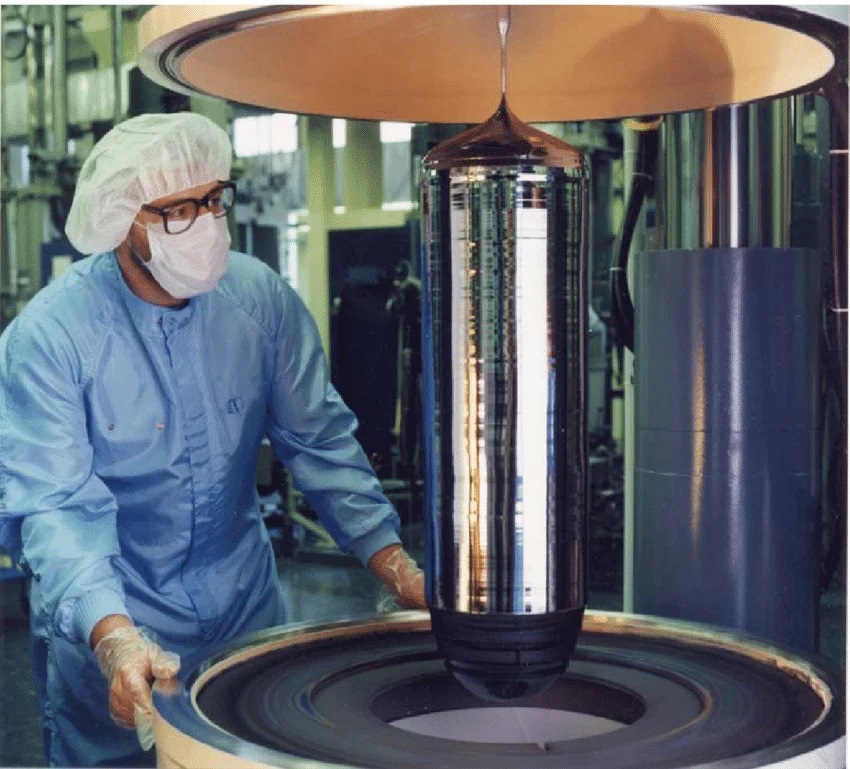 A photo of a silicon single crystal and a Czochralski puller. Credit: E. Dornberger
This object might look like a big, ordinary column of metal, but unlike any ordinary piece of metal, all of its atoms are arranged in an orderly manner. This crystalline perfection is important because defects will mess up its semiconducting properties.
Our silicon crystal is then sliced into thin sheets called wafers, which undergo further processing to form the final chip. These chips go into integrated circuits that are found in almost all electronic devices.
So, in a very real sense, crystals lie at the foundation of modern technology.
Okay, this took an interesting turn. First, we were talking about how anyone can grow crystals at home with salt and sugar. And all of a sudden, I’m saying that they are all around us.
I guess the point I’m trying to make is that crystals aren’t just beautiful. It also connects many different areas of our lives. Growing crystals can be a hobby, a classroom experiment, a way to get people interested in science, and also part of some of the most advanced technology we have.
To me, this is the coolest part about learning and trying out new stuff. It creates connections, and that makes the world feel richer.
Growing crystals just adds one more facet to life.
So, stay curious.
And maybe, grow some crystals at home.


WOW!! i like your crystals so much, im a high schooler and i do physics and mainly chemistry experiments at home, i stumbled on crystal making while i was researching on my experiment. I did read your blog it was awesome, i tried making crystals at home too and i do use your recipes for better crystals! thanks!
You can also check this video. The time lapse is just insane https://youtu.be/uSSoSIcXWa0?si=ppeO5Fl0RhoueQ3s